The Brain and the Body of Marketing: Why They Need Each Other
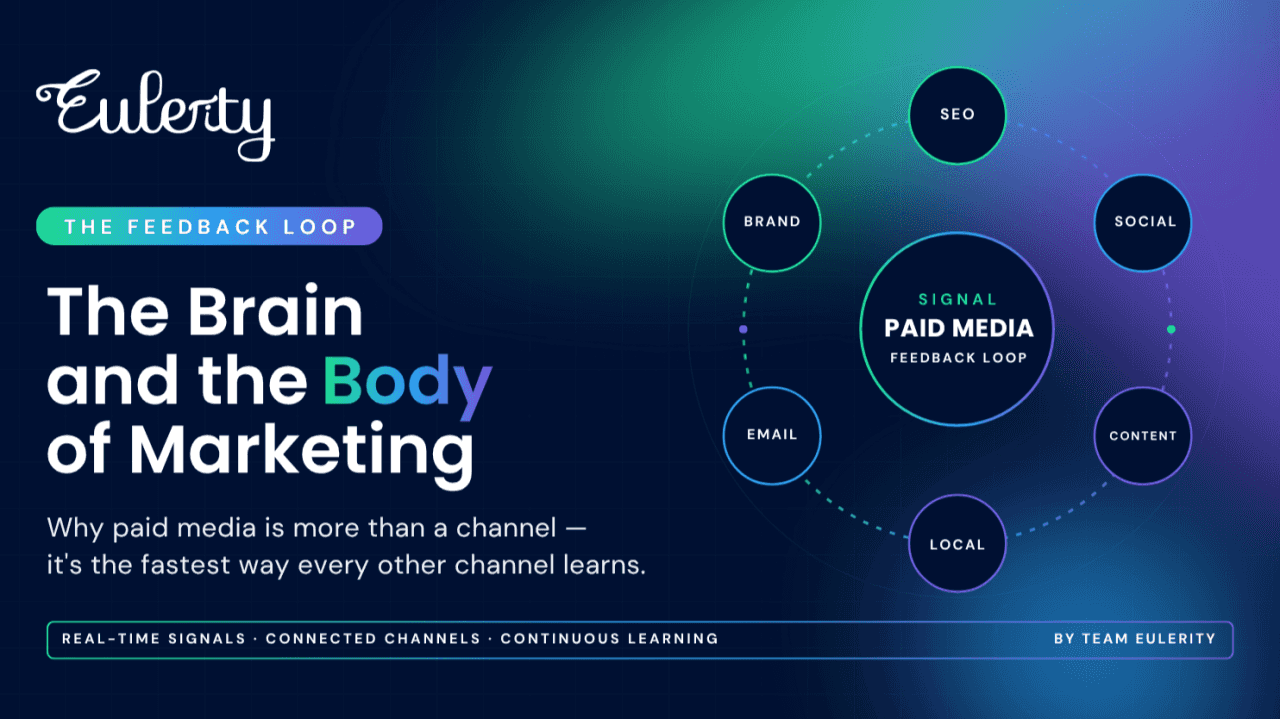
By Eulerity
May 5, 2026
Most marketing organizations aren't broken—they're just fragmented.
Paid media lives in one lane, SEO in another, social somewhere else, and local listings often sit in a system that's rarely revisited. Each function has its own metrics, cadence, and definition of success. And while each piece may be working, they're not always working together. The result isn't failure. It's missed potential, especially in an AI search world.
Paid media isn't just another channel. It's one of the fastest and most precise feedback loops available in modern marketing, and it can play a much bigger role. This isn't a philosophical shift. It's an operational opportunity.
The Speed Gap Most Teams Feel
Organic channels matter. They build credibility, community, and long-term value. But they take time. A blog post can take weeks to rank. Social campaigns often need sustained effort before patterns emerge. Even email testing requires cycles to generate meaningful insights. Meanwhile, customer behavior is constantly evolving, sometimes daily.
Paid media operates on a different timeline. Within hours, you can start to see which messages resonate, which audiences engage, and which offers drive action. That's not just performance data. It's live market feedback.
Real-Time Signals, Right When They Matter
Searches like "emergency HVAC repair near me" or "best pediatric dentist" aren't just clicks. They're moments of clear intent. Paid media allows you to respond to those moments quickly, adjusting messaging, creative, and targeting in near real time.
Across search, social, and display, this creates a steady stream of signals:
- What messaging is connecting right now
- Which audiences are actively in-market
- What offers are compelling
- Which creative formats are performing
Many teams use this data to improve ad performance. The bigger opportunity is using it to inform everything else.
From Channel to Feedback Loop
A simple shift in perspective can unlock a lot of value:
Instead of asking "How do we improve paid performance?" Ask "What is paid performance teaching us about our customers?"
- High-performing ad headlines can influence website copy and email subject lines
- Converting audiences can shape content strategy and organic messaging
- Top search queries can inform AEO and how your brand shows up in AI-driven results
Paid media becomes more than execution. It becomes a continuous learning loop. The best messaging often doesn't come from internal brainstorming. It emerges from real-world testing.
Where Things Typically Break Down
Most organizations already have the data. They just don't always connect it. Different teams (or partners) manage different channels, each optimizing for their own goals. Paid focuses on ROAS, SEO on rankings, social on engagement. All valuable, but often siloed.
That can make it harder to answer bigger questions:
- What insights from paid could improve organic performance?
- What messaging is worth scaling across channels?
- Where should we double down based on real customer behavior?
For multi-location brands, this matters even more. There's an enormous volume of local interactions happening every day. When connected, those signals become incredibly powerful.
What It Looks Like When It Comes Together
When paid media is used as a central feedback loop, the entire system starts to align:
- Content reflects what customers are actively searching for
- Listings and local presence evolve based on what drives conversions
- Review responses and social messaging become more relevant
- Website copy is shaped by what actually performs
- Brand voice starts to mirror the language of the market
Marketing becomes less about isolated efforts and more about a system that continuously learns and improves.
A Different Way to Think About It
The brands that stand out aren't always the ones spending the most. They're the ones learning the fastest and applying those learnings across everything they do.
Paid media is one of the clearest sources of that learning. When it's connected to the broader system, it can help every channel perform better.
And that's where the real leverage is.