Why Answer Engines Are Watching Everything Your Brand Does Online
By Tanuj Joshi, CEO and Co-Founder, Eulerity
April 28, 2026
Most marketing teams have a clear picture of what each channel is supposed to do. Paid media drives leads. Listings keep business information accurate. Reviews manage reputation. Social builds brand awareness. Each function has its own team, its own tools, its own KPIs, and its own definition of success.
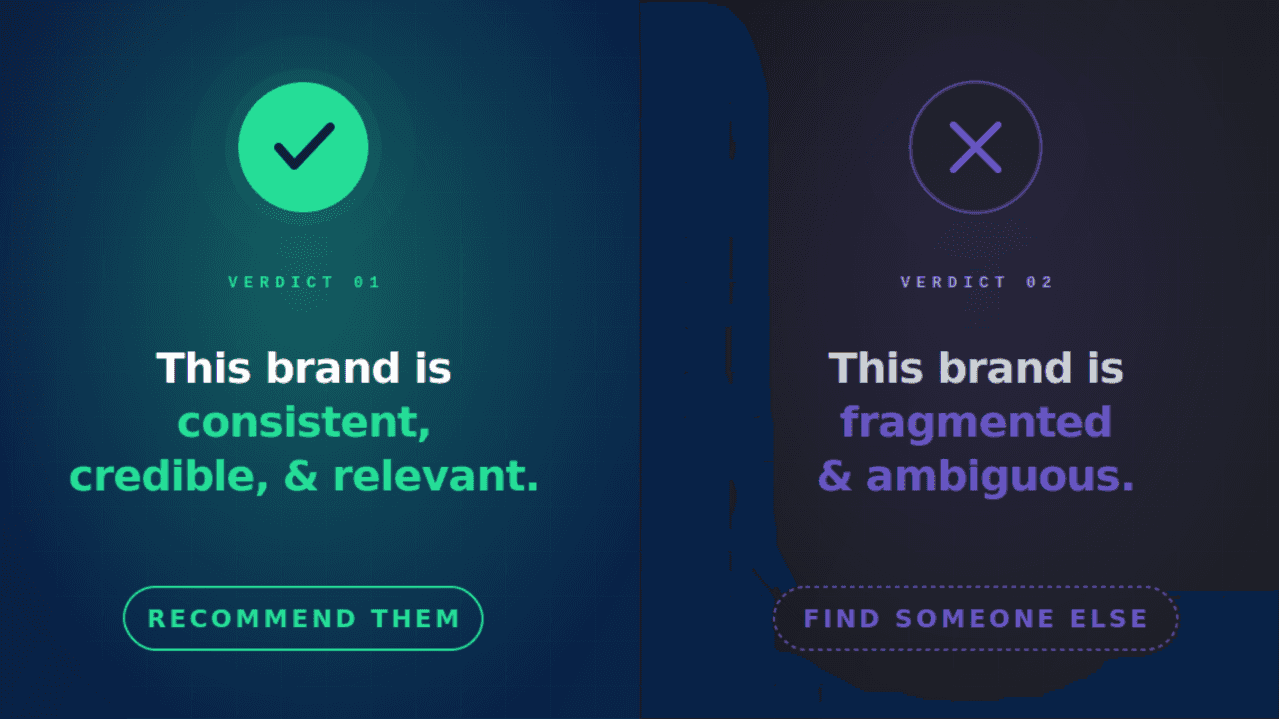
That model worked well enough in the old search environment. In an Answer Engine Optimization world, it's leaving significant visibility on the table, because answer engines don't see your channels. They see your signals. Right now, for most brands, those signals are fragmented, inconsistent, and far weaker than they should be.
Here's what each channel actually contributes to your AEO position, and where most teams are getting it wrong.
Paid Media: Teaching the Algorithm What You're Relevant For
Paid media's role in AEO is one of the least understood connections in digital marketing, and one of the most consequential. The conventional view of paid search is straightforward: you bid on keywords, your ad appears, users click, you capture demand. The campaign succeeds when it generates conversions at an acceptable cost.
Then, there's a second-order effect happening beneath the surface. Every time a user searches a query, clicks your ad, and converts, that interaction is a data point, not just for your campaign, but for the broader ecosystem's understanding of your brand's relevance for that intent. High conversion rates on specific queries signal that your business satisfies the intent behind those searches. That satisfaction signal feeds into how answer engines evaluate relevance.
In practical terms: if your paid campaigns consistently convert on "emergency plumbing repair near me," you're not just buying leads. You're contributing to a data record that positions your brand as a legitimate answer for emergency plumbing intent. Over time, that matters.
Where most teams get this wrong is in the disconnect between keyword, creative, and landing page. When those three elements are misaligned, meaning when the search query, the ad copy, and the destination page are telling different stories, the conversion rate suffers, and so does the relevance signal. AEO-aware paid media means treating landing page alignment as a signals strategy, not just a quality score optimization.
Listings: The Foundation That Everything Else Builds On
If paid media is a signal of relevance, listings are the signal of existence. Answer engines operate from a structured understanding of the world. Before an AI system can recommend your business as the answer to a local or service-specific query, it needs to have a clear, consistent, verified record of what your business is, where it operates, and what it does. That record comes primarily from your business listings across Google, Apple Maps, Bing, and the broader network of data aggregators that feed into these platforms.
Incomplete, inconsistent, or outdated listing data doesn't just hurt your local search rankings. In an AEO environment, it creates ambiguity and answer engines resolve ambiguity by choosing a different answer. If your NAP (name, address, phone) data is inconsistent across platforms, if your service categories are vague or inaccurate, or if your hours haven't been updated since before a location change, then you're introducing noise into the signal that answer engines are trying to read.
The brands winning in AEO are treating listings management as infrastructure, not administration. It's not a quarterly hygiene task, but the foundation layer that everything else depends on, and it needs to be accurate, comprehensive, and actively maintained across every platform that feeds into the answer engine ecosystem.
This includes attributes that many brands overlook: accessibility features, payment methods, service areas, photos, Q&A content. These are structured data points that answer engines use to match your business to specific, detailed queries.
Reviews: The Trust Layer That Determines Who Gets Picked
When an answer engine evaluates which business to recommend for a given query, it's making a trust determination, not just a relevance determination. Reviews are the primary input for that trust signal. The mechanics of how reviews influence AEO go beyond the obvious higher star rating meaning more trust. Three specific dimensions matter. First is volume, which signals credibility. A business with two hundred reviews has a data record that answer engines can evaluate with confidence. A business with twelve reviews introduces uncertainty. The second dimension is recency, which signals relevance. A business whose most recent reviews are from eighteen months ago raises a question: is this business still operating the way these reviews describe? Answer engines favor freshness, and a review profile that stopped growing is a staleness signal. The last key piece is content, which signals specificity. Reviews that mention specific services, locations, and use cases give answer engines something to match against specific queries. A review that says "great experience" is less useful to an answer engine than one that says "fast response for emergency furnace repair in the middle of winter." The latter is keyword-rich, service-specific, and intent-matched in a way that influences AEO directly.
The strategic implication is that review generation needs to be an ongoing operational process, not a periodic campaign. Brands that generate a burst of reviews and then go quiet are actively degrading their AEO position over time.
Social: The Freshness and Context Signal
Social content is often treated as the channel most disconnected from business performance, a brand awareness investment whose impact is real but diffuse and hard to measure. In an AEO context, social plays a more specific and underappreciated role. It signals topical freshness and reinforces the contextual understanding of what your business does. Answer engines aren't just evaluating your website and your structured data. They're reading your digital footprint across the web, and social content is a meaningful part of that footprint. Consistent social posting that mentions specific services, locations, seasonal promotions, and operational updates gives answer engines a continuously updated picture of your business's relevance.
The key word is consistent. Social's contribution to AEO comes from the pattern of activity, not from any individual post going viral. A brand that posts regularly about its core services using natural language that mirrors how customers search is continuously reinforcing topical authority signals. A brand that posts sporadically, or that posts content focused purely on brand aesthetics rather than services, is leaving that signal weak.
The alignment question to ask about every piece of social content is, does this reinforce what we want answer engines to understand about our business? If the answer is no, the content may be valuable for other reasons, but it's not contributing to your AEO position.
The Signal System View
Taken individually, each of these channels is performing a specific function. But the insight that separates AEO-ready brands from the rest is understanding that these channels are not independent, they're inputs into the same evaluation system. Answer engines are making holistic assessments. A business with strong listings but weak reviews sends a mixed signal. A business with excellent reviews but inconsistent listings creates ambiguity. A business running paid campaigns that don't align with its organic content and social presence is telling different stories to the same audience.
The brands that will win in the Answer Era are the ones who recognize that every channel is contributing to a unified signal, and who manage them accordingly. Not as separate channels, but as a coordinated system.